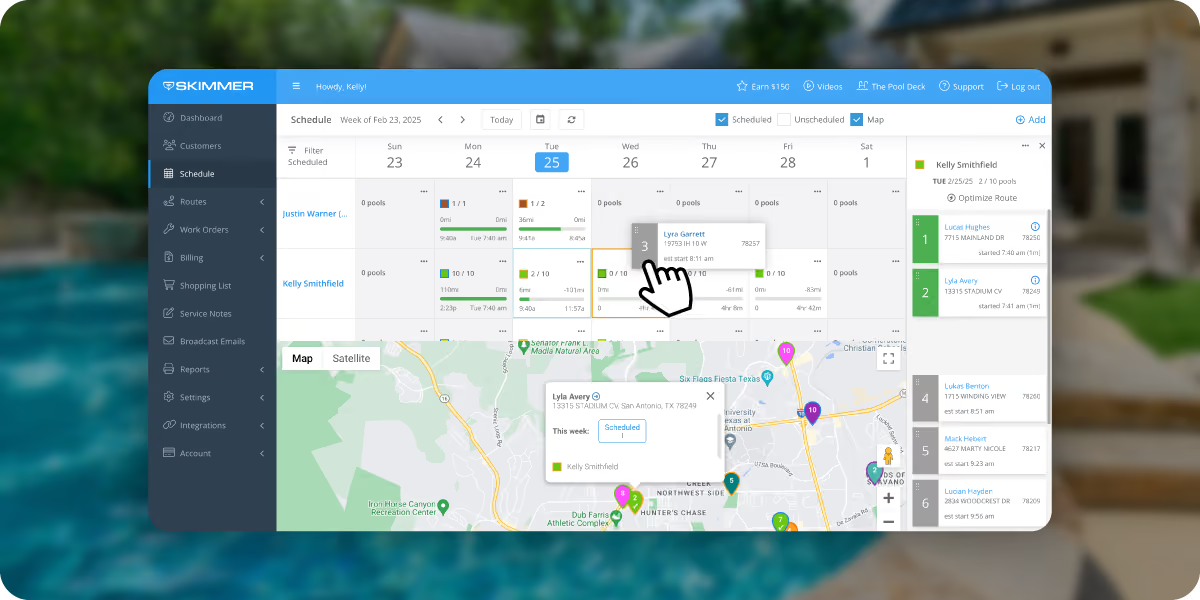
Build the team your pool service business needs to grow — and keep them.





Pool service demand is strong. More than 80% of pool pros expect higher revenue in 2026. But growth means nothing if you can't staff for it.
Hiring, training, and retaining top talent ranks as one of the top three challenges of running a pool service business — and it's one of the costliest. People-related expenses account for 35% of pool service company budgets, and the cost of bringing on a new employee typically runs between $2,500 and $10,000, with some cases reaching $20,000.
The 2026 State of Pool Service Report makes it clear: hiring is now deliberate amid tight labor markets. The businesses pulling ahead aren't scrambling to fill open seats — they've built repeatable systems for finding, evaluating, onboarding, and keeping good people.
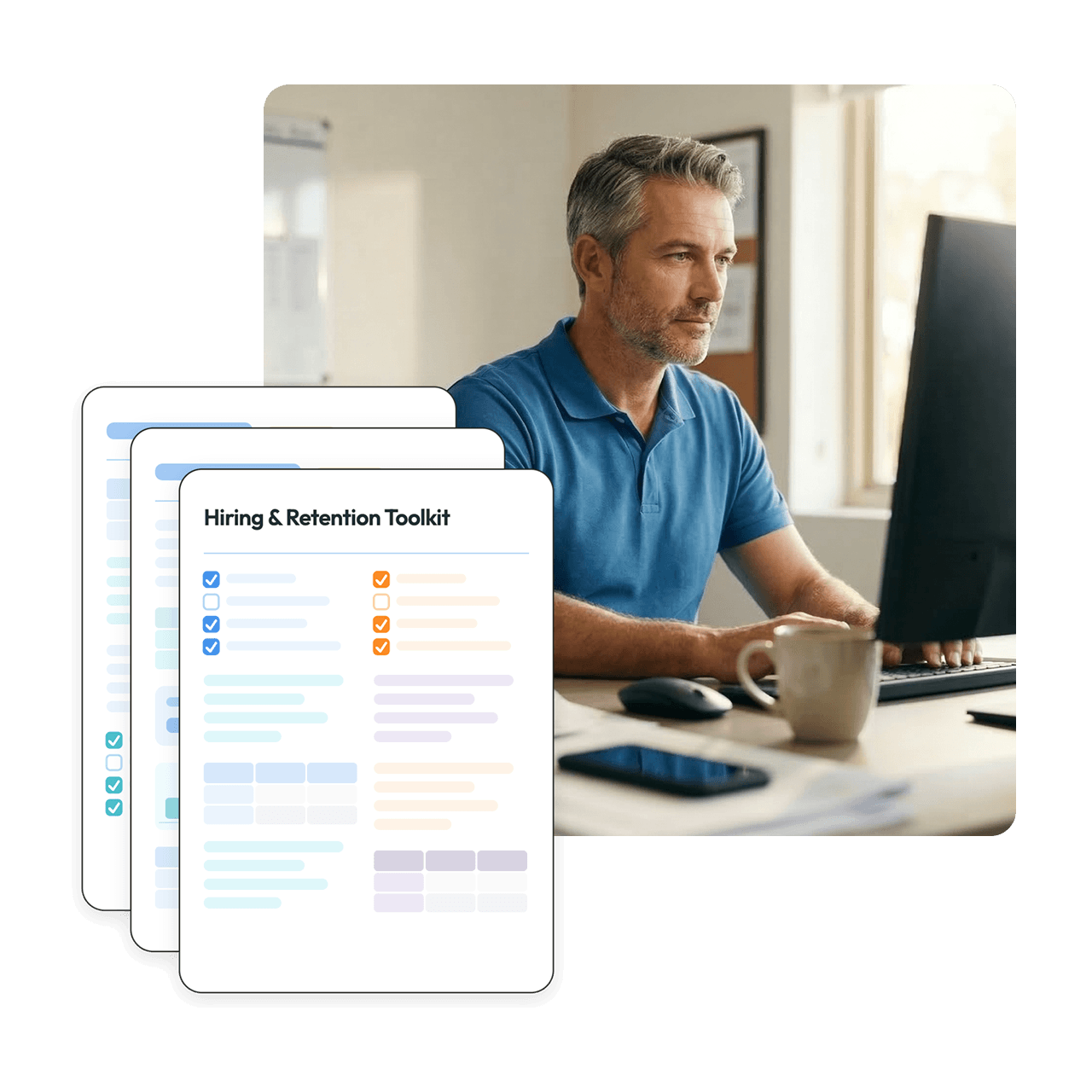
This toolkit gives you those systems. Templates, guides, and expert frameworks developed by pool pros who've done it at scale — all in one place, all free.
📄 Sample job description and offer letter A ready-to-use template covering employment type, pay structure, probation period, PTO, technology requirements, vehicle policy, and more. Clear from day one means fewer surprises for you and your new hire.
🗂 Repair technician career path A leveled advancement framework that shows techs exactly what skills they need to move up — and what comes with it. No vague promises. A real roadmap.
📘 Sample employee handbook Establish your company culture, policies, and expectations in writing before problems happen. Covers everything from safety protocols to scheduling norms.
🎯 Sample pool technician interviewing guide A structured question bank blending behavioral, situational, and technical questions so you're evaluating every candidate the same way. Stops you from hiring on gut feel alone.
📊 Sample quarterly meeting template A ready-to-run format for team meetings that celebrate wins, align on KPIs, recognize top performers, and keep your crew motivated between annual reviews.
📋 Sample new hire onboarding checklist A structured checklist covering everything from day-one orientation through the first 90 days — company values, training modules, water chemistry competencies, software setup, and more. Takes the guesswork out of getting a new tech up to speed consistently every time.
🎥 Webinar: Hire, train, retain — building rockstar pool service teams with Kyle Peter Watch Nevergreen Pool Service founder Kyle Peter walk through how he grew from a solo operator to a 20-person team serving 1,000+ pools weekly. Real tactics, real numbers, no filler. Or read the full written recap if you'd rather skim.
The industry is maturing. The businesses pulling ahead aren't chasing growth at all costs — they're building structure: clear pricing, better systems, stronger communication, so they can deliver consistent service and run healthier operations.
That same discipline has to apply to your people operations.
The 2026 State of Pool Service Report shows that most businesses plan to hire or hold steady, reflecting tight labor conditions and a focus on consistency over rapid headcount growth. Translation: the days of throwing someone in a truck and figuring it out are behind us. Today's operators need a structured process — from the first interview through the first year.
Structured hiring is one piece of the larger puzzle — the seven operational habits of successful pool service companies cover the rest.
The numbers reinforce it. 47% of pool service businesses now operate with a crew of 2–6 members, and 52% of those technicians are W-2 employees rather than contractors — a signal that operators are investing in people for the long term.
Rising customer expectations around digital communication, proof of work, and technician consistency are reinforcing the role of modern systems in building trust and long-term retention. When your team is inconsistent, your customers notice — and they leave.
Good hiring and retention practices aren't HR busywork. They're a competitive advantage.
Step 1: Audit what you have. Before your next hire, compare your current process to the templates. Where are the gaps? Most operators discover they've never put their expectations in writing.
Step 2: Set up the paperwork. Use the job description, offer letter, and employee handbook to create a consistent, professional experience from the moment a candidate gets an offer.
Step 3: Run structured interviews. Stop improvising. Use the interviewing guide to score candidates against the same criteria every time.
Step 4: Onboard with intent. Combine the career path framework with your first 90 days to give new hires clarity on where they stand and where they're headed.
Step 5: Run quarterly meetings that actually matter. Use the meeting template to keep your team aligned, recognized, and motivated — not just informed.
Step 6: Learn from someone who's done it. Watch the webinar to see how Kyle Peter built one of the most systemized pool service teams in the country, and pull the tactics that apply to your operation.
Whether you're hiring your first technician or managing a crew of ten, the challenge is the same: finding people who show up, treat customers well, and stay. This toolkit was built for that specific problem — not generic small business HR advice.
✅ Solo operators preparing to hire for the first time
✅ Growing companies formalizing their people processes
✅ Multi-tech operations looking to reduce turnover and improve team performance
Once your hiring engine is steady, the nextchapter is harder: how to build a team of leaders who run the day without you.
Is this toolkit really free?
Yes. No trial, no credit card, no strings. Download it, use it, share it.
Who created these templates?
The resources in this toolkit were developed with input from Kyle Peter of Nevergreen Pool Service, who built a 20-person team through a deliberate, documented hiring process. These aren't theoretical frameworks — they're tools that have been used in the field.
Do I need to be a Skimmer customer to use this?
No. These resources are available to any pool service professional, regardless of what software you use.
What if I already have some of these documents?
Use what's useful, skip what you don't need. The toolkit is modular — each resource stands on its own.
When should I start building hiring systems?
Before you need to hire. Setting up these processes when you're not in a rush gives you time to customize them. Most operators who scramble during a hire do so because they have no documented baseline to work from.
How does this connect to the webinar?
The templates were developed alongside the webinar content. We recommend watching the webinar first to understand the reasoning behind the frameworks, then using the documents to implement what you learn.