Frequently asked questions
How big is the pool service industry in 2026?
The pool cleaning and maintenance segment is currently valued at approximately $7.2 billion and is projected to grow to $7.8 billion by 2029. Demand for both cleaning and repair services has increased steadily since 2022, driven in large part by the volume of pools installed during the COVID-19 pandemic now requiring professional service and out-of-warranty repairs.
How much should a pool service company spend on marketing?
According to benchmarks shared during the webinar, operators in mid-sized markets should expect to spend at least $1,000 per month on digital advertising to generate meaningful leads. In major metro areas, that floor rises to around $1,500 per month. At a conservative 10% close rate, that level of spend typically yields 5 to 10 new customers per month, at an average acquisition cost of roughly $255 per customer.
How often should a pool service company raise its prices?
Industry experts recommend raising prices on a small but consistent annual basis rather than waiting years and making a large jump. Customers generally expect service prices to increase incrementally and are far less likely to churn in response to a modest annual adjustment than to a sudden significant increase. Regular pricing discipline also protects margins against rising costs for labor, chemicals, fuel, and insurance.
What is the hardest stage of growing a pool service business?
The phase between two and ten trucks is widely considered the most difficult. At this stage, owners typically hire their first non-revenue-generating staff, such as an office manager or route supervisor, and must absorb those costs before the operational benefits materialize. Building intentional company culture during this phase is critical to getting through it successfully.
Why is it hard to find and keep pool service employees?
Pool service is not a career most people plan for, which means operators are continually cycling through candidates who are testing the work before deciding to commit. The operators who retain staff most effectively tend to invest in workplace culture through weekly team meetings, W-2 employment models with benefits, team-building activities, and internal referral programs. Consistent, proactive hiring rather than reactive hiring also reduces the pressure created by sudden vacancies.
What software do pool service companies use?
All-in-one field management software and accounting platforms are the most widely used tools in the industry. GPS tracking software is also popular for monitoring field teams. A growing number of operators are adopting CRM platforms to manage the full customer lifecycle from initial lead to long-term account. A notable share of respondents in Skimmer's 2026 report still use no software at all, though that number is declining as the industry matures.
What financial metrics should pool service companies track?
Cash flow is the most critical metric for business survival. Beyond that, operators should track profitability by service line, separating cleaning revenue and costs from repair revenue and costs. Repair typically carries higher margins than cleaning, but cleaning should still be profitable on its own. A formal budget, tracked consistently against actual performance, is the foundational tool most operators underutilize.
Should a pool service company consider selling to private equity?
That decision depends entirely on the individual owner's goals, timeline, and values. What the panelists agreed on is that building a business as if it were sale-ready, with clean financials, documented processes, route density, and a capable leadership team, makes the business better regardless of whether a sale ever happens. Operators considering a sale are advised to get clear on what they want their life to look like post-transaction before evaluating any offer.
Is AI going to replace pool service technicians?
Not in any near-term scenario discussed in the webinar. The physical work of cleaning pools and repairing equipment requires human presence and judgment that current technology cannot replicate. AI is being adopted in pool service primarily as an administrative and communication tool, helping operators save time on scheduling, customer messaging, reporting, and data analysis. Skimmer announced upcoming AI-powered features including a plain-language business data query tool.
What are the biggest challenges facing pool service businesses in 2026?
Based on Skimmer's survey data, the top challenges are economic pressures including inflation and rising overhead costs, labor and staffing shortages, and the increasing cost and difficulty of obtaining business insurance. Chemical costs have stabilized somewhat, but labor remains the most persistently cited constraint on growth across businesses of all sizes.
Key takeaways
- The pool cleaning market is valued at $7.2 billion and growing, with COVID-era pools aging out of warranty and driving a sustained surge in service and repair demand.
- The industry is shifting from volume to profitability. Operators are becoming more selective about customers and more focused on margin per pool than total account count.
- Consistent, small annual price increases are the fastest path to profit. Raising prices costs nothing operationally, compounds significantly over time, and causes far less customer friction than infrequent large jumps.
- Systems and repeatability separate thriving operators from struggling ones. The two-to-ten truck phase is the hardest stretch, requiring owners to invest in people and culture before the financial return becomes visible.
- Labor is the industry's most persistent constraint. The operators who win on hiring build workplaces people want to stay at, hire continuously rather than reactively, and lean on employee referrals.
- Insurance costs are rising sharply, and safety can no longer be deprioritized. Carriers are dropping pool service as a category, making safety a direct cost-of-doing-business issue with measurable financial consequences.
- Whether or not you plan to sell, build as if you might. Clean financials, documented processes, and strong leadership make any business more valuable and better run.

##TOC##
##Key takeaways##
Building a more profitable, predictable business
Hosted by Skimmer's Director of Industry Relations Niki Acosta, this webinar brought together two seasoned industry voices — Hal Denbar, former CEO of National Pool Partners and current Skimmer board member, and Megan Kendrick, owner of PoolPro magazine — to unpack findings from Skimmer's third annual State of Pool Service report. The report combined survey responses from over 1,600 pool service professionals with anonymized operational data from more than one million pools under management on the Skimmer platform, making it, by Skimmer's account, the largest industry report of its kind.

Kendrick underscored just how significant that is: as a journalist who has covered the pool industry since 2008, she noted that hard, reliable data has historically been almost nonexistent. "For the first time in my entire career," she said, "I actually have real, solid information and numbers to go with what we're talking about."
Watch the full webinar on demand now, and don’t forget to download the 2026 State of Pool Service Report for free.
Who's in the room
Before diving into the data, Acosta introduced her two panelists, whose backgrounds framed the entire conversation.
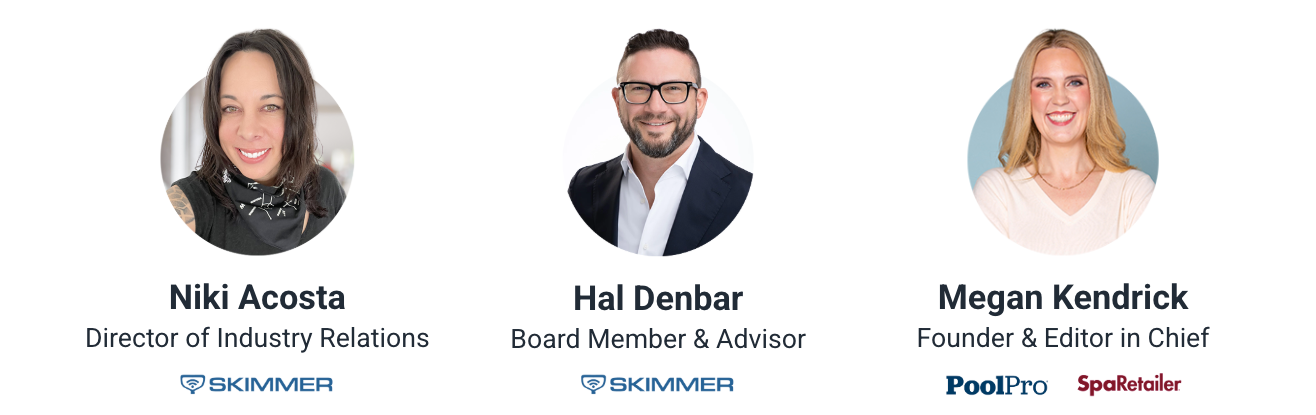
Hal Denbar started Patriot Pool and Spa in Austin, Texas, the week he graduated college, with one account, no employees, and by his own admission, no knowledge of pools or business. He ran solo for five years before hiring his first employee, eventually scaling to become the largest residential pool service provider in Austin. His philosophy from day one: "We're a customer service company that happens to clean pools." He later sold Patriot to National Pool Partners, where he rose from running the Texas business to COO to CEO. That arc, from one-puller to executive leading hundreds of technicians across the country, gave him a vantage point few in the industry share.
Megan Kendrick joined the publishing side of the industry straight out of grad school in 2008, helping launch PoolPro magazine and covering pool business owners for her entire career. In 2018, she purchased the magazines outright. Her perspective throughout the webinar was that of someone who has had hundreds of frank conversations with operators at every stage of growth and who reads the gaps between what owners say and what the data actually shows.
Industry landscape: a growing market with new pressures
The pool service market is large, expanding, and increasingly complex to navigate. The pool cleaning segment alone represents a $7.2 billion market, projected to reach $7.8 billion by 2029. Search volume data collected by Skimmer shows meaningful, sustained increases in consumer demand for cleaning, maintenance, and repair services since 2022.
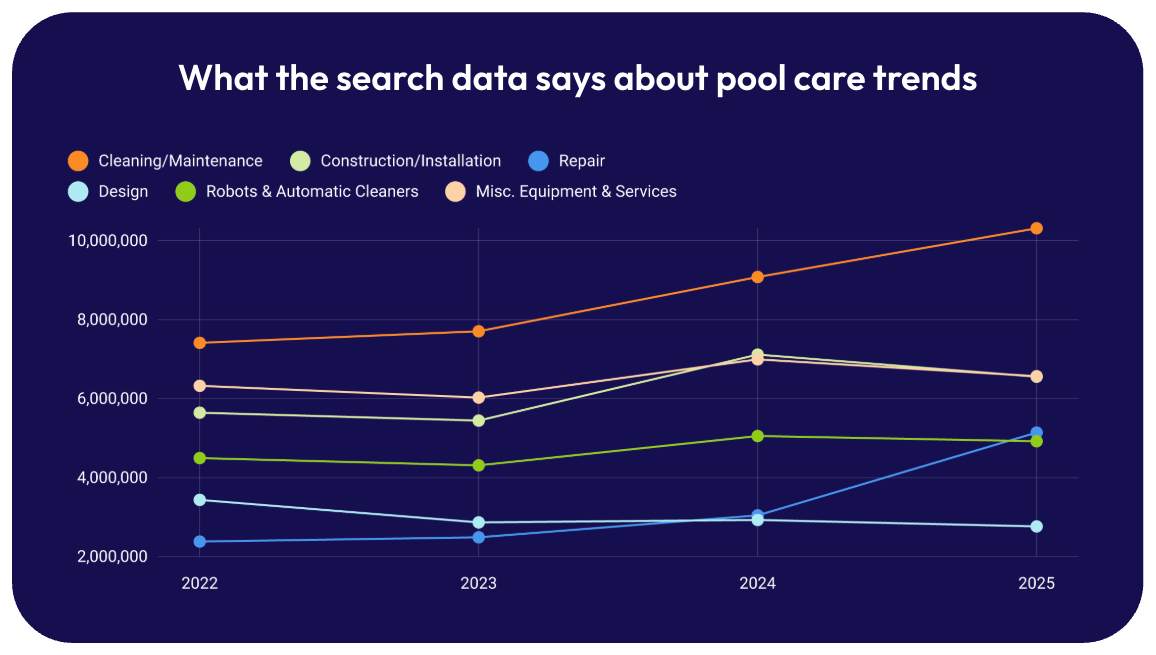
Denbar offered a straightforward explanation for the repair spike in particular: "There are a lot of homeowners that are having things break in their COVID pools for the first time, not under warranty, and they're trying to find a service company outside of the pool builder to handle that." The cleaning demand increase likely reflects a similar dynamic, with homeowners who bought pools during the pandemic attempting DIY maintenance for a year or two before deciding to outsource it.
The implication for service operators is significant. Demand is not softening. The post-COVID pool inventory is aging into a sustained service and repair opportunity, and operators positioned to capture it, with professional systems, responsive communication, and disciplined pricing, stand to benefit considerably.
Three core report themes
When Skimmer analyzed this year's data, three themes surfaced consistently.
1. Disciplined growth
The industry is visibly shifting from a volume mentality to a profitability mentality. Rather than simply adding as many pools as possible, operators are increasingly asking harder questions: Which customers are actually worth keeping? Which service lines generate the best margins? How do I grow without sacrificing what I'm already doing well?
Acosta framed it clearly: "The shift that we're seeing based on the data is one from volume to profitability." This shows up in how people plan to grow, with internal efficiency improvements topping the list, followed by increased marketing investment, expansion into adjacent service lines like leak detection and coping repair, and notably, a deliberate reduction in customer count to improve per-pool profitability.
That last point deserves attention. A growing segment of operators are concluding that fewer, better-paying customers on tighter routes is a more sustainable model than maximizing headcount. As Denbar put it: "A lot of people just are starting to see that they can work less and make more money."
2. Operational consistency
Growth without systems creates problems that compound quickly. The strongest operators in this year's data are building repeatable, documented processes, the kind that deliver the same quality of service regardless of which technician is on the route or what day of the week it is. As Acosta noted, "being able to deliver reliable, repeatable, predictable service is so, so important."
The most difficult stretch in this journey, according to Denbar, is the phase between two and ten trucks. "That's where, as an owner, you're going to lose your sanity, you're not gonna make it, you're gonna work ten times harder and make the same or less money than you were making." This is the stage where owners hire their first non-revenue-generating employees, an office manager or route supervisor, and have to stomach the cost before the return materializes.
His advice: get through it as fast as possible, and be deliberate about culture from the start. "Between two and ten trucks is when you start to build a company that develops a culture, whether you know it's happening or not. Being intentional about making sure you know it's happening and it's being shaped the way you want to shape it is really the key."
3. Technology as a force multiplier
All-in-one field management software and accounting platforms top the list of tools both currently in use and planned for purchase in 2026. GPS tracking is a consistently popular category, with owners wanting real-time visibility into where their teams are in the field. CRM platforms are gaining traction as marketing becomes more sophisticated and operators want to track the full customer lifecycle from first lead to long-term account.
What's notable in the data is that software costs are actually shrinking as a percentage of overall expenses, not because operators are spending less, but because their revenue and margins are growing faster than their software costs. Acosta interpreted this as a sign that the investment is working: "Folks who are investing in software and efficiencies across their business are getting some leverage out of it."
Still, a meaningful share of respondents reported using no software at all. Kendrick's reaction was unambiguous: "That stresses me out to no end. I could never."
Pricing discipline: the most underleveraged tool in the industry
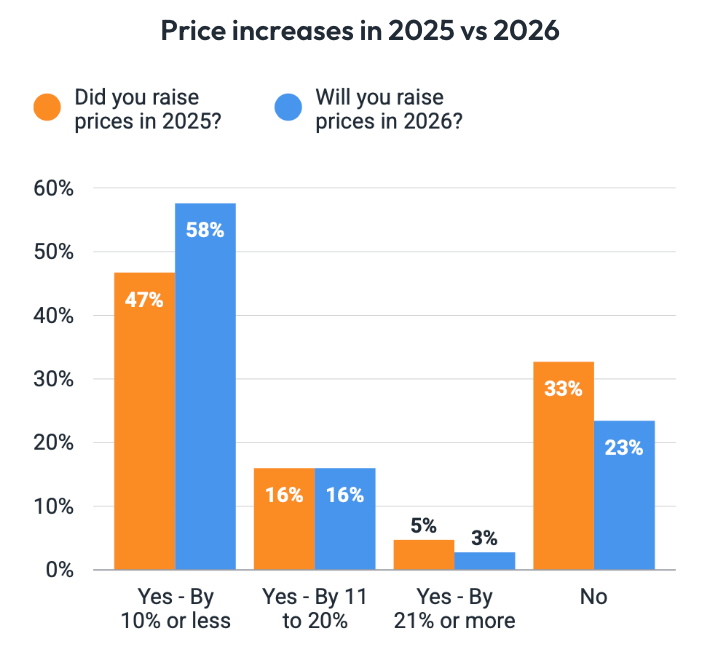
If there was one area where Denbar spoke with particular intensity, it was pricing. His core argument is straightforward: raising prices is, operationally, free profit. "Price is free money. If you decide you want to raise your price 10% versus grow your customer volume 10%, it costs you money to grow your customers. Every new customer is a new dollar you have to spend. You take price, you don't have to spend any more money. All of that growth just drops straight to the bottom line."
The industry has historically resisted this. Fear of customer attrition, competitive pressure, and a general discomfort with conflict have kept many operators from raising prices consistently. Denbar acknowledged that COVID-era supply chain disruptions forced a behavioral shift: operators had to raise prices for pure survival, and discovered that most customers stayed. "It's never as bad as you think it's gonna be."
Kendrick echoed this from a consumer perspective: "My lawn guy, every year it goes up two or three bucks, and you don't bat an eye at that. But when you're looking at an entire route, that adds up really quickly." Her caution was about consistency. Operators who delay increases and then try to make up ground with a large jump are the ones who generate customer friction. Small, annual increases, compounded over time, are both financially powerful and far less likely to trigger cancellations.
Denbar also made a point that often gets overlooked: repair pricing is where many businesses quietly erode their margins. "Repair is actually where a lot of times we'll get eaten alive on increases. And repair is something that if you've got a good, sticky cleaning customer, they're less likely to go price shop you on the repair." Operators who think about pricing only through the lens of their monthly cleaning fee are missing half the equation.
On underpriced markets, specifically Arizona and Florida, Denbar attributed the problem to density. High concentrations of pools drive commoditization, which suppresses rates. His counterintuitive read: this is actually an opportunity. "There's less professional competition. By differentiating, you may need to educate the customer on what professional even looks like, because it may not be easy to find. But I think there's big upside there."
Labor & staffing: the problem without a clean solution
Labor remains the single most cited constraint on growth, and unlike pricing or systems, it doesn't have a tidy fix. Denbar was candid: "There's not a solve right now. This is a long-term growth opportunity for the industry." Pool service isn't an industry most trades-oriented workers grow up planning to enter, which means operators are constantly cycling through people who are "trying it on to fit" before finding the ones who stay.
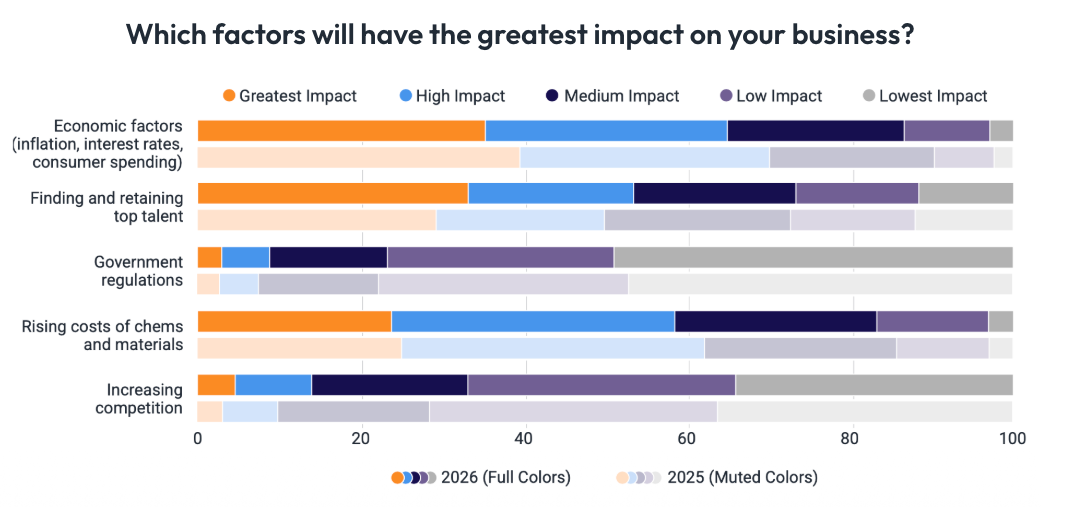
His prescription centers on culture and self-awareness. "Look yourself in the mirror and ask: are you somebody you'd want to work for? Because it is the number one pain point, but it's also the number one way you can differentiate yourself from the other companies in town. If you're the coolest place to work, you're gonna be the best company in town, you can charge the most."
Practical tactics Denbar credited with building retention at Patriot Pool include weekly in-person team meetings, moving from contractor to W-2 employment models, running team contests, and creating opportunities for technicians to build genuine friendships with colleagues. The underlying logic is straightforward: people who have friends at work are less likely to leave. The data in this year's report shows a meaningful industry shift toward W-2 employment and benefits offerings, including health insurance, 401Ks, and revenue sharing.
Kendrick focused on hiring process quality. "Hiring is a skill, and it's a skill you need to work on and hone. It's not something that comes naturally to most of us." She pointed to the PHDA's Work in Aquatics job board as a free resource that reaches candidates specifically looking for industry roles. More importantly, she argued that operators who only hire reactively, when they're already short-staffed, are perpetually behind. "Considering the labor issue that we have, it should just be a constant thing. When you find somebody good, sometimes you just have to pull the trigger."
Denbar's closing point on hiring aligned with a comment from the webinar chat: the best candidates often come from within. "A players hang out with A players. Employee referral is always the best way."
Budget pressures & the insurance problem
Budget-related expenses as a share of overall costs rose from 12% in 2024 to 24% in 2026, a substantial jump that reflects both inflation and the operational formalization that comes with scaling. Insurance, fuel, vehicles, and professional services are the primary drivers.
Denbar flagged a specific and underreported problem: insurance carriers are increasingly refusing to quote pool service businesses at all. "There are a lot of insurance carriers that have completely dropped the category of swimming pool service." He attributed this to the industry's historically poor track record on safety, a logical outcome in an industry dominated by small owner-operators without formal safety programs. His call to action was direct: "Safety really needs to start moving to the forefront of our minds. Our people deserve it, and as the secondary, what we're seeing in this graph is it's having real impacts on businesses."
The practical implication: safety isn't an ethical obligation operators can continue to defer. It is now a direct cost-of-doing-business issue with measurable financial consequences.
Marketing: spend is rising, but speed wins
Increased marketing investment was one of the more encouraging signals in this year's data. Kendrick called it out specifically: "The first year you guys did the report, it was shocking to me how little paid marketing was actually happening in our industry." That's changing, and the emergence of marketing agencies specifically built for the pool service niche, many founded by former operators, is accelerating it.
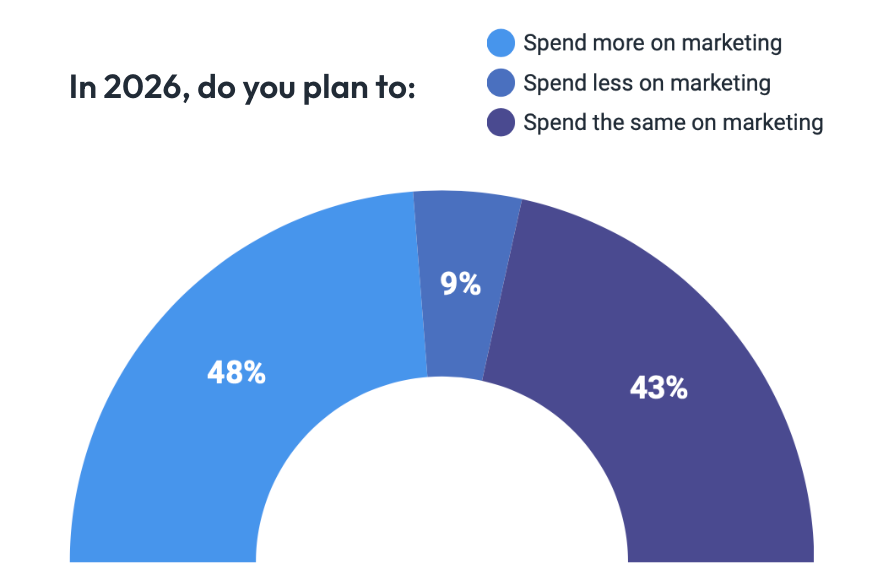
For operators trying to understand what it actually costs to compete digitally, Acosta shared benchmarks from a pool-specific marketing firm: roughly $1,000/month in a mid-sized market and at least $1,500/month in a major metro to generate meaningful lead volume. At a conservative 10% close rate, that translates to 5–10 new customers per month, at an average acquisition cost of around $255 per customer. For context, buying an established route typically runs 6–12x the monthly service value, making digital acquisition meaningfully cheaper for operators in growth mode.
The critical variable isn't the spend level; it's response speed. As Kendrick put it: "It's speed to lead. People have a time limit of about five minutes, and if you haven't responded within five minutes, they're moving on."
Denbar offered a counterpoint worth sitting with: for smaller operators especially, culture and customer experience are themselves a form of marketing. At Patriot Pool, he spent almost nothing on paid advertising. "Every interaction is marketing. The attitude and tone of voice of whoever's on the phone, every word that comes out of their mouth is marketing. Same thing with the people we put in the field. That drove growth in a massive way."
The implication is that paid marketing and cultural marketing aren't competing strategies. The operators capturing the most growth in 2026 are likely doing both.
Private equity & consolidation: building sale-ready, whether you sell or not
Industry sentiment around private equity is mixed. The webinar data showed operators with divided opinions about PE firms generally, but the panel landed on a point of broad agreement: the discipline required to build a sale-ready business is exactly the discipline that makes any business run better, regardless of whether a sale ever happens.
The fundamentals PE buyers examine, including clean financials, documented processes, route density, and leadership depth, are the same fundamentals that separate struggling operators from thriving ones. As Acosta summarized: "Building your business as though it were ready to sell is the way to go."

Denbar argued that PE's most lasting contribution to the pool service industry may not be the deals themselves, but the way the possibility of a deal has changed how operators think. "When I talk to business owners around the country, they know their numbers, and they're speaking a language they weren't speaking five or ten years ago. That's a sign that this industry is getting more professional."
Kendrick offered a more measured take: "I think the opportunity being available has changed the way people look at their business, looking at it as a business and not as a job." Her hesitation was about pace, not direction. Progress is real; it may be slower than warranted.
For operators seriously considering a sale, both panelists stressed the importance of clarity over excitement. Kendrick's advice: "Know what you want your life to look like. Not the number, but what do you want your life to look like? Work backwards from there. Go in with open eyes, not rose-colored glasses."
What success looks like in 2026
Acosta closed the presentation with a clean summary of what the data suggests distinguishes the strongest operators heading into the year:
- Disciplined pricing, raised consistently and without apology
- Selective hiring, treated as an ongoing process rather than a reactive one
- Systematic marketing, with real budget and real response infrastructure
- Consistent service delivery, built on documented, repeatable processes
- Digital maturity across operations, from billing and scheduling to customer communication
- Preparedness, not apprehension, around consolidation and regulatory change
Final recommendations
Hal Denbar: "Know your numbers and be in control of your numbers. In the next 30 days, go learn something in QuickBooks you didn't know before. Go learn something in your field management software you didn't know before. That's the only way you're going to be able to continue to thrive and create more opportunity for other people." His specific emphasis: understand cleaning and repair profitability separately, not just in aggregate. Repair should be more profitable than cleaning, and if you can't tell whether it is, that's the problem to solve first.
Megan Kendrick: "If you don't have a budget, go make one right now, and watch it. You can't fix what you don't know, and you don't know what you don't track." For operators looking to build basic financial literacy, she recommended two accessible books: Managing by the Numbers and The Profit Problem. Attendees also flagged Profit First as a popular resource in the same category.