


Frequently Asked Questions
How do I identify the limiting beliefs that are blocking my pool business growth?
Watch for recurring thoughts that stop action (e.g., “I’m not a salesperson”). Follow Michelle Kavanaugh’s advice: write the belief down, ask “Is this really true?” and check the evidence. Track how that thought changes your behavior—beliefs shape actions, so spotting the loop is the first step to breaking it.
How do I bring subconscious thoughts to the surface so I can reframe them?
Use journaling, a daily thought log, or brief mindfulness checks before work to capture automatic thoughts. Name the fear out loud and ask, “What’s the worst that could happen?” Practicing this repeatedly helps you reframe fears as normal discomfort rather than facts.
What are practical first steps to overcome fear and start growing the business?
Start small: commit to one action per day (e.g., contact one new lead). Seek support from a coach, Mastermind, or trusted peer. Embrace imperfection—mistakes teach you faster than overplanning. Repeat small wins to build momentum.
How do I build systems and actually get my team to use them?
Create a process map for key workflows, document each step, then identify what to delegate or automate. Choose simple tools to automate repetitive tasks, standardize communication, and train staff. Clear documentation plus regular recognition builds accountability and reduces burnout.
How do I adopt a visionary mindset and turn it into measurable goals?
Write a short vision statement describing your ideal year. Convert it to SMART goals (Specific, Measurable, Achievable, Relevant, Time-bound). Break goals into weekly, monthly, quarterly actions—e.g., to expand to 400 pools, calculate required monthly sales and track progress daily.
Key takeaways:
- Spot and challenge the beliefs holding you back — bring subconscious thoughts to the surface, ask “Is this really true?” and reframe them so your actions match the growth you want.
- Move forward one small step at a time — start with tiny wins (one new contact a day), get support from mentors or peers, and accept that mistakes are part of the process.
- Design a clear vision and action plan — write a simple vision statement, set SMART goals, and do one daily/weekly task that moves you toward them; delegate or standardize work to free up time.
- Build systems and a growth culture — map processes, automate what you can, improve team communication, recognize progress, and invest in training so growth isn’t all on you.
##Key takeaways##
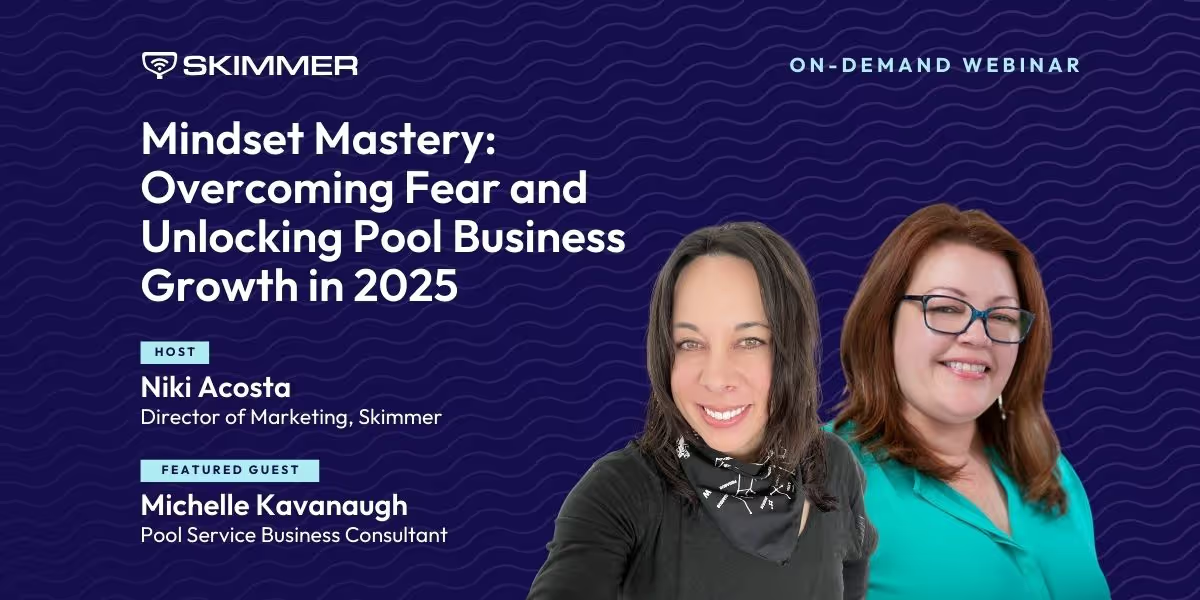
This blog post is a summary of a Webinar co-hosted by business consultant Michelle Kavanaugh and Niki Acosta, Skimmer’s Director of Marketing. Watch the full webinar on demand here.
If you talk to enough pool pros in a day (and at Skimmer, we talk to lots of them), you’ll notice a trend: many of them claim they don’t want to grow their business.
The specific reasons why are always different, ranging from, “If I change anything about our system, my employees will revolt,” to, “I just don’t have time to work on the business,” and everything in between. But these excuses all tie back to the same essential truth: growth is scary.
Over the 20-plus years that Michelle Kavanaugh has worked in the pool industry, she’s noticed this trend too. Now she’s setting out to change it. During this webinar, she shared her tips for overcoming fear to unlock growth potential. A summary of her tips are below.
1. Identify limiting beliefs
A fear of growth doesn’t just appear out of nowhere. It’s caused by limiting beliefs.
For example, a pool service owner who insists they can’t grow their business because they’re not good at sales usually believes one of two things: that their sales efforts will be rejected, or that their services aren’t valuable enough to warrant a sales push.
The hardest pill to swallow here is that if you have a belief about yourself, you’re right. Not because your beliefs are rooted in reality, but because your actions follow your beliefs. In other words, if you believe you can, you will, and if you believe you can’t, you won’t.
This momentum cycle can only be broken with self awareness. The moment you recognize the belief patterns that impact your actions, you can interrupt and challenge them. Once you slow down and start asking yourself, “Is this really true? What evidence supports this belief?” you’ll start to find holes in the beliefs that aren’t serving you.
2. Bring subconscious thoughts to the surface
Limiting beliefs are formed in your subconscious mind, which doesn’t know the difference between what’s real and what’s imagined. If you believe something subconsciously, it feels real.
This is why it’s important to bring your limiting beliefs to the surface to examine and challenge them. The more you practice recognizing your own subconscious thought patterns, the better you’ll get at reframing them.
Eventually, you’ll get to a point where you can say, “The reason I’m in this fear state is because I’m outside of my comfort zone, and that’s a good thing.” And though negative thoughts will always creep back in throughout the day, if you can reframe them, you can transcend them.
3. Overcome fear, one small step at a time
Overcoming fear takes time and practice. It’s not something you can do in one leap. Rather, take it step by step:
1. Start small
Break down your goals into small steps and focus on taking one action at a time. It can be as small as contacting one new potential customer every day. Each small success builds confidence.
2. Seek support
As they say, a burden shared is a burden halved. Seeking support from a coach, mentor, Mastermind group or business owner you admire in the industry can help you feel like you’re not navigating uncharted waters alone.
Support can also be less formal than that. Finding podcasts or books that focus on entrepreneurial growth can help change your mindset over time.
3. Embrace imperfection
This one’s important: It’s okay to make mistakes. The only real mistake is thinking that a misstep means you’re not cut out for your line of work. Mistakes are a part of business, and if you can learn from them, you can adjust your course for the future.
4. Build resilience and stay motivated
Keeping up a positive mindset over time takes work. Here are Michelle’s tips to stay motivated.
1. Identify triggers
We all have triggers that can send us spiralling, so it’s important to know your own. Triggers could be family members, colleagues, or things people say to you. When you identify them, you can develop strategies to overcome them.
2. Celebrate milestones
It’s important to recognize your progress and achievements along the way, no matter how small. Remember those small steps we outlined in the last section? They’re a great place to start. Before long, you’ll be celebrating bigger wins.
3. Use positive self-talk
Negative thoughts are there to protect you, but focusing on your strengths and the progress you’ve made can take you much further. Don’t forget to take the time to engage in positive self-talk. Tell yourself that you’re capable of achieving your goals, even if it feels silly.
5. Adopt a visionary mindset
Too many people have no vision at all for their business, and many don’t even have a goal for 2025. Dare yourself to dream big by adopting a visionary mindset.
1. Create a vision statement
What does your ideal future look like? If your answer is, “I don’t know,” imagine you were looking back on the best year of your life. What would it have looked like? What highlights would you be talking about? Your vision doesn’t have to be hyper-specific, but it should inspire you. Write it down and keep it in your line of sight.
2. Set goals
Break down your vision into specific, measurable, achievable, relevant, and time-bound goals. For example, if your vision is to expand to 400 pools, how much do you have to increase sales by each month to hit that goal?
3. Action plan
Develop a step-by-step plan for the week, month, and quarter, then do one thing every day that brings you closer to that goal. If you don’t feel like you have the time to do that, standardize or delegate repetitive tasks so you can focus your time strategically.
6. Build systems—and then use them
Many pool pros refuse to delegate because they think it’s easier to do things themselves. But just because you can doesn’t mean you should (that’s how burnout happens). Instead, build systems that will allow you to automate and delegate, so you can level up and work on strategic initiatives.
1. Build a process map
Identify key processes in your business and document each step within that process. This will help you understand your workflows and identify areas for improvement. You’ll also get a better idea of what you can a) delegate to other team members or b) automate.
2. Automate tasks
Once you’ve identified which tasks can be automated, it’s important to find the right tool that will allow you to do that consistently.
3. Improve communication
Systems need strong communication to thrive. Build a team culture of collaboration, and keep your employees informed and accountable.
4. Market your expertise
When you’ve streamlined your systems, you can start working on the business, rather than in it.
Many people are uncomfortable marketing themselves, but don’t shy away from this. You’re an important part of the brand, and people want to know what you’re all about. You’ll be surprised at how powerful your story can be. You’re an expert, and people want to know how you’re bringing value to their lives.
7. Build a growth-oriented culture
Growth isn’t something you have to manage alone forever. When you set up your systems to run well and foster trust within your team, you’ll create a culture of growth that includes everyone.
Recognition and development both contribute to an ongoing growth-oriented culture.
- Regularly recognizing and celebrating your team’s accomplishments can help you foster a positive work environment.
- Investing in your team’s development through training and continuous improvement will show them that you’re invested in their future, too.
When you overcome fear, you can do anything
Facing your fear is the first step in a long journey. When you can identify and conquer your limiting beliefs, you can embrace growth. Ultimately, Michelle’s advice comes down to three main tenets:
Mindset is power
A growth-oriented mindset is essential for success. It shapes your beliefs, actions, and results.
Fear is conquerable
You can overcome fear with strategies, support, and a positive mindset. It doesn’t have to hold you back, you just have to learn to reframe it.
Action is key
You must take action to achieve your goals. Develop an action plan and consistently work toward your vision.
.avif)


